
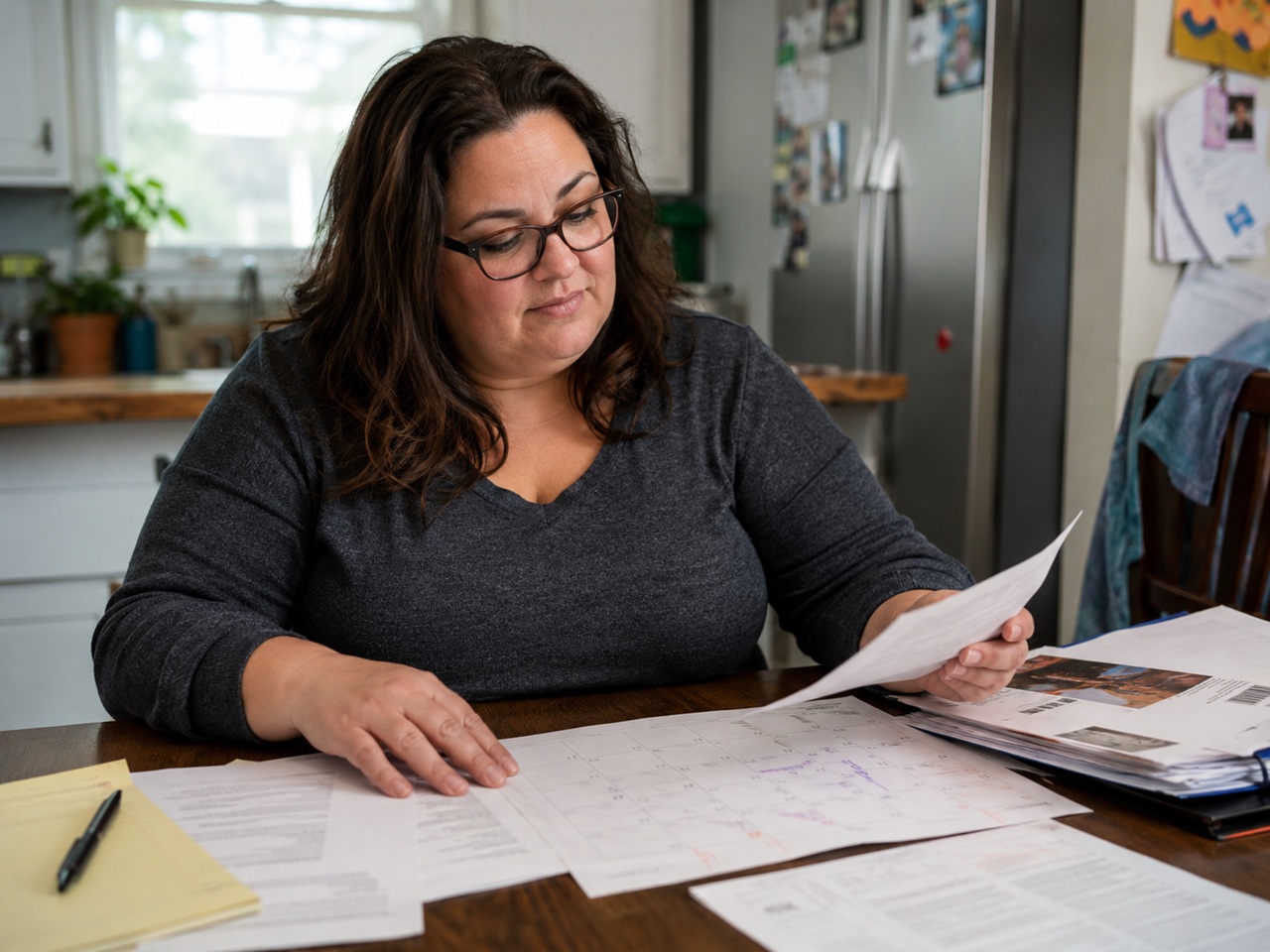
When Life Changes, So Can a Custody or Support Order
A custody or support order that made sense during a divorce doesn’t always fit years later. Jobs change, children grow older, parents relocate, schedules shift, and family needs evolve in ways the original order couldn’t fully anticipate.
When that happens, a Belleville child custody attorney can explain whether the situation may qualify for a formal modification under Illinois law. Parents shouldn’t rely on handshake agreements or text-message promises when the current order no longer works. If the court order needs to be changed, the court usually must approve the change.
At Courtney Clark Law, P.C., we help parents throughout Belleville and southwest Illinois understand their options when parenting time, decision-making responsibilities, or child support no longer reflects real life.
Illinois Courts Look For A Real Change In Circumstances
Illinois courts recognize that family life rarely stays static. But that doesn’t mean every frustration, schedule conflict, or short-term setback justifies changing a court order.
For child support, 750 ILCS 5/510 allows modification upon a showing of a substantial change in circumstances. For parenting plans and allocation judgments, 750 ILCS 5/610.5 focuses on whether a substantial change has occurred and whether modification is necessary to serve the child’s best interests.
That means the parent asking for the change needs more than a preference. They need facts, documentation, and a clear explanation of why the current order no longer works.
Common Reasons Parents Request Custody Or Support Modifications
Courts look for specific, well-documented reasons before changing an existing order. The strongest cases usually connect the requested change to the child’s needs, the parents’ circumstances, or the financial realities behind support.
- A Significant Change in Income: A job loss, promotion, pay cut, disability, new work schedule, or other major financial shift may justify a change in support.
- A Parent’s Relocation: A move can affect parenting time, transportation, school routines, and the practicality of the existing schedule.
- The Child’s Changing Needs: Medical care, school issues, therapy, extracurricular activities, or age-related needs may make the old order unrealistic.
- A Pattern of Non-Compliance: Repeated missed payments, denied parenting time, or refusal to follow the parenting plan may require court action.
- A Change in the Child’s Living Situation: If the child is spending substantially more time with one parent than the order says, the order may need to catch up with reality.
- Safety or Stability Concerns: Substance abuse, unsafe housing, untreated mental health issues, domestic violence, or neglect may support a request for a different parenting arrangement.
Every one of these situations involves more than proving that something changed. The court also needs to understand why that change matters enough to justify a new order.
Parenting Time And Decision-Making Are Not The Same Thing
Illinois no longer uses “custody” in the same way many parents still use the word in conversation. Instead, Illinois law focuses on parenting time and parental decision-making responsibilities.
Parenting time refers to the time each parent spends with the child. Decision-making responsibilities involve major choices regarding education, healthcare, religion, and extracurricular activities. A parent may need to modify one part of the order without changing the other.
For example, a new work schedule may require changes to parenting time without changing who makes school or medical decisions. A parent’s refusal to cooperate on major decisions may require a modification to decision-making, even if the parenting schedule stays mostly the same.
If you’re unsure what part of your order needs to change, our article on Illinois child custody laws explains how parental responsibilities and parenting time work under current Illinois terminology.
Child Support Modifications Need Financial Proof
Child support modifications usually turn on numbers. A parent who wants to increase or decrease support needs to provide evidence explaining why the current amount no longer fits the family’s circumstances.
That proof may include pay stubs, tax returns, proof of unemployment, medical bills, childcare costs, health insurance costs, school expenses, or documentation showing that the child’s needs have changed.
Illinois law also limits retroactive modification of support. In general, support may be modified only for installments accruing after the other parent receives due notice of the motion to modify. That makes timing important. If support needs to change, waiting can cost money.
The Court Process For Requesting A Modification
Modifying a custody or support order isn’t as simple as both parents agreeing to do things differently. Even when both parents are cooperative, the safest approach is usually to put the new terms in writing and ask the court to approve them.
A formal modification typically involves:
- Reviewing the Current Order: The attorney needs to understand exactly what the existing parenting plan, allocation judgment, or support order says.
- Identifying the Change: The petition should explain what changed since the last order and why the current order no longer works.
- Gathering Evidence: Financial records, messages, calendars, medical records, school documents, and proof of missed parenting time may all matter.
- Filing the Petition: The parent requesting the change asks the court to modify the existing order.
- Serving the Other Parent: The other parent must receive proper notice and an opportunity to respond.
- Negotiation or Court Hearing: Some cases resolve by agreement. Others require the judge to hear evidence and make a decision.
A post-judgment modification can have a major effect on a parent’s time, finances, and relationship with their child. It’s worth handling carefully from the start.
Informal Agreements Can Create Serious Problems
Parents sometimes agree between themselves to change the parenting schedule, reduce support, skip payments, or handle expenses differently. That may work for a while, but it can become a major problem if the agreement is never approved by the court.
If the written court order says one thing and the informal agreement says another, the court order usually controls. That means a parent who relied on an informal change may later be accused of violating the order, even if both parents originally agreed.
This comes up often with support. A parent may agree to accept lower payments during a temporary hardship, but if the order is not modified, unpaid amounts may still build up as arrears. A parent who needs relief should ask the court for a modification instead of assuming a private agreement will protect them.
When The Other Parent Won’t Follow The Order
Getting a modified order is only half the battle. Once the court approves a custody or support arrangement, both parents need to follow it. If one parent ignores the order, the other parent may need to ask the court to enforce it.
Non-compliance may involve unpaid child support, consistently late payments, denied parenting time, refusal to exchange the child, failure to communicate about major decisions, or repeated violations of the parenting plan.
Under 750 ILCS 5/607.5, Illinois courts provide an expedited procedure for enforcing allocated parenting time. Available remedies may include makeup parenting time, reimbursement of expenses, contempt findings, civil fines, and other orders designed to protect the child’s best interests.
If the issue involves unpaid support, parents should understand what can happen when child support isn’t paid. Withholding parenting time, ignoring other parts of the order, or taking matters into your own hands can create new legal problems. The solution is to go back to court and ask the judge to enforce the order.
Tools Courts Can Use To Enforce Support Or Parenting Time
Illinois courts have several tools for addressing noncompliance. The right remedy depends on the type of violation, the history between the parents, and what the court believes will protect the child and enforce the order.
- Petitions for Contempt: A parent can ask the court to hold the other parent accountable for willfully violating the order.
- Makeup Parenting Time: If parenting time was wrongfully denied, the court may order replacement time.
- Expense Reimbursement: A parent may seek reimbursement for costs incurred as a result of the violation.
- Wage Withholding: Unpaid support may be collected directly from the paying parent’s wages.
- License Suspension: In serious support cases, Illinois can suspend driving privileges when a parent falls far enough behind.
- Further Modification: Repeated violations may support a later request to change the parenting plan or support order.
None of these remedies happens automatically. The parent who wants enforcement usually has to document the violation and ask the court to act.
Evidence That Can Strengthen A Modification Or Enforcement Case
Family law modification cases often come down to documentation. A judge needs to see what changed, when it changed, and how it affects the child or the support obligation.
Helpful evidence may include:
- Income Records: Pay stubs, tax returns, job-loss letters, benefit records, and proof of new employment can support or challenge a support modification.
- Parenting Calendars: A written record of exchanges, missed visits, late pickups, denied parenting time, and schedule changes can show a pattern.
- Texts and Emails: Digital communication can help establish what each parent said, agreed to, refused, or ignored.
- School and Medical Records: These records may show changes in the child’s needs, attendance, performance, treatment, or daily routine.
- Expense Records: Receipts for childcare, medical bills, insurance, extracurricular activities, transportation, and school expenses may matter.
- Relocation Documentation: Lease agreements, job offers, school enrollment, and travel-distance information can help explain why the current schedule no longer works.
Digital communication can be especially important in family court. Text messages and emails can help prove what happened, what each parent agreed to, and whether someone ignored the order. Those records should be saved carefully and shared with your attorney before any enforcement or modification hearing.
How Courtney Clark Law Can Help With Your Modification
If your circumstances have changed since your last custody or support order was entered, we want you to understand your options before you make decisions that affect your child, your finances, and your future.
Our family law attorneys at Courtney Clark Law, P.C. have spent decades handling custody, support, and post-judgment modification cases throughout Belleville and southwest Illinois. We understand how personal these issues are, and we know how stressful it can be when the existing order no longer fits your life.
We treat every case individually because every family’s circumstances are different. When you work with us, you’ll be kept informed, your questions will be answered directly, and we’ll work toward a resolution that fits your life today, not the one you had years ago.
A custody or support order doesn’t have to stay the same forever, and you don’t have to navigate a modification alone. Contact us today for a free consultation and find out how we can help you move forward.
"Made an extremely difficult time of my life that much easier." - Daniel A., ⭐⭐⭐⭐⭐